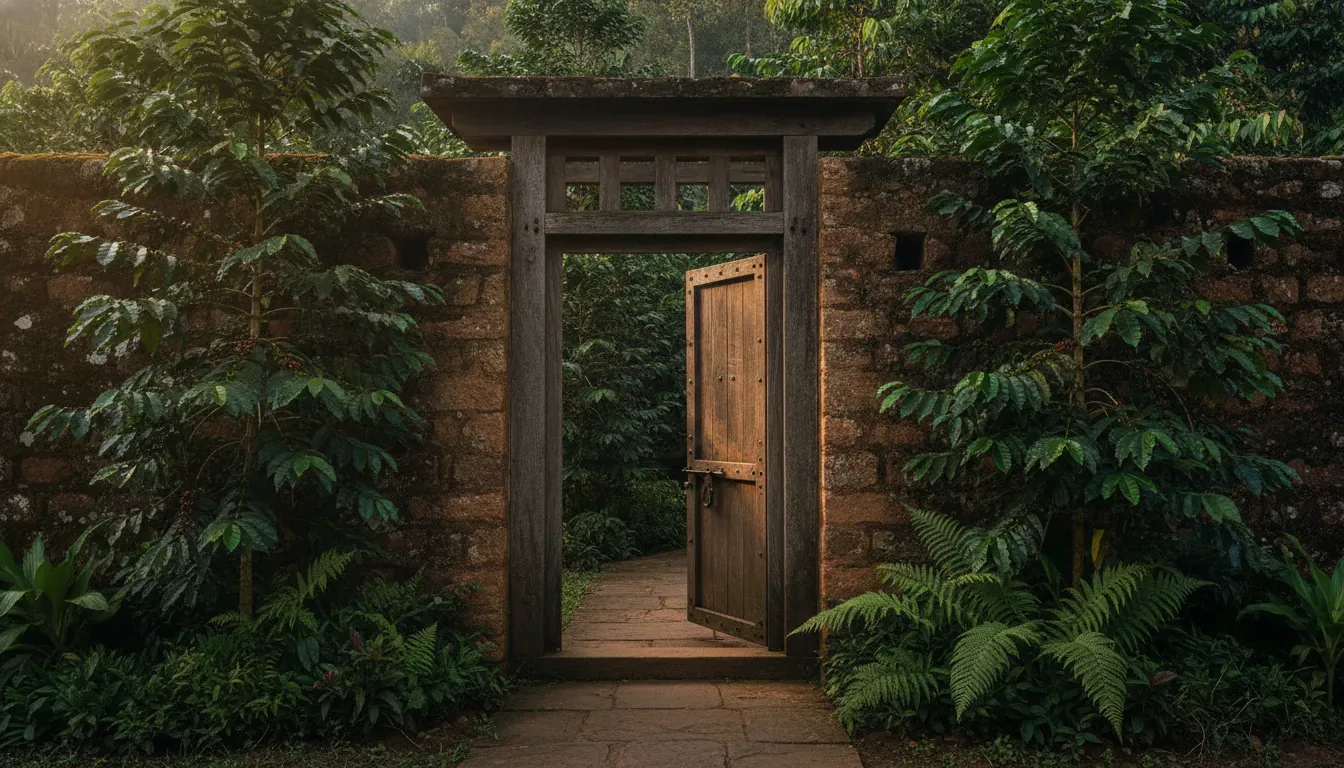
Manjarabad Fort is the star-shaped hill fort Tipu Sultan built in 1792, a few minutes off NH75 outside Sakleshpur, and the most-reviewed sight in the area, with a 4.2 rating from close to 20,000 Google reviews. Locals call it ಮಂಜರಾಬಾದ್ ಕೋಟೆ, and on a crowded weekend it is still the stop people make. One rider on Reddit's r/bangalorebikes wrote: "Since it was a long weekend, Sakleshpur was crowded, hence we decided to just have a look at the Manjarabad fort."
The planning is where it gets messy. Look up the timings and one page says the gate shuts at 5 pm while another says 6 pm. Look up the steps and you will find 200, 250 or 300. Almost no page says when its numbers were checked, which matters when you are coming from Bengaluru with children or older parents in the car.
This guide sorts that out. The timings, fee and step count were checked in September 2026, the climb gets an honest note, and you will know which season and hour give you the Western Ghats in view rather than a wall of fog. If you only want to know whether this star fort is worth visiting, the answer is yes, with a few conditions. The quick facts come first, all in one place.
What is Manjarabad Fort, and what are its timings, entry fee and climb
Manjarabad Fort is an eight-pointed star fort built by Tipu Sultan in 1792 on a 988 m hilltop off NH75, 4 to 6 km from Sakleshpur town. It is open daily from 8 am to 6 pm, there is no entry fee, and the climb is about 250 stone steps from the road. As for how long to plan, about an hour covers it: be there at 8 am for the quietest visit, and go in winter or just after the monsoon for the clearest views.
Fact
DetailOpen | Daily, 8 am to 6 pm (Karnataka Tourism). Some listings show a 5 pm close, so aim to be done by 5 pm.
Entry fee | None
The climb | About 200 m on foot from where you park, then about 250 stone steps
Time needed | About an hour, including the climb
Height | 988 m (about 3,241 ft)
Where | Kalagane, off NH75, 4 to 6 km from Sakleshpur town; 13 minutes from Ashvana
Best time | Winter or just after the monsoon; 8 am for fewer people
Is Manjarabad Fort worth visiting
Manjarabad Fort is worth an hour of any Sakleshpur trip: it is close to the highway, free to enter, and one of the few star-shaped forts still standing that you can walk around. How long does it take? About an hour, including the steps.
It is also no secret. The 4.2 rating from close to 20,000 Google reviews tells you how many people stop here, so you will not have it to yourself at noon. The fort is partially restored and open to the public.
Go if:
- You like history, or you want a view over the hills.
- You are on NH75 anyway, since the fort sits just off it.
- Everyone in your group can manage about 250 steps.
Skip it if:
- Someone in your group cannot manage steps.
- It is a thick-fog monsoon day and the view is the reason you came.
- It is midday on a long weekend.
If you do go, the walls make more sense once you know why Tipu Sultan put a fort on this hill.
What is the history of Manjarabad Fort
Manjarabad Fort was built in 1792 by Tipu Sultan, the ruler of Mysore, to keep the highway between Mangalore and Coorg secure. Wikipedia records that he built it while establishing his sovereignty over Mysore and fighting other South Indian dynasties.
Why was Manjarabad Fort built with French help
Tipu Sultan was allied with the French against the British, and French engineers helped with the design. The purpose, in Wikipedia's words, was "to make the highway between Mangalore and Coorg secure".
How was the fort named
When Tipu Sultan came to inspect the fort, he found it wrapped in fog, and the name comes from that visit. Karnataka Tourism ties it to "manju", the Kannada word for fog or mist. Come in the monsoon and you will see why.
Stories you will hear
Karnataka Tourism's account says Tipu Sultan had his soldiers build the fort in a single day. You will also hear that a tunnel runs from here to Srirangapatna. It is a popular story; the accounts from Karnataka Tourism and Wikipedia do not mention one.
Today the fort is partially restored and open to the public. Part of its history is written into its outline, because the walls form a star, and that shape was chosen for a reason.
Why is Manjarabad Fort shaped like a star
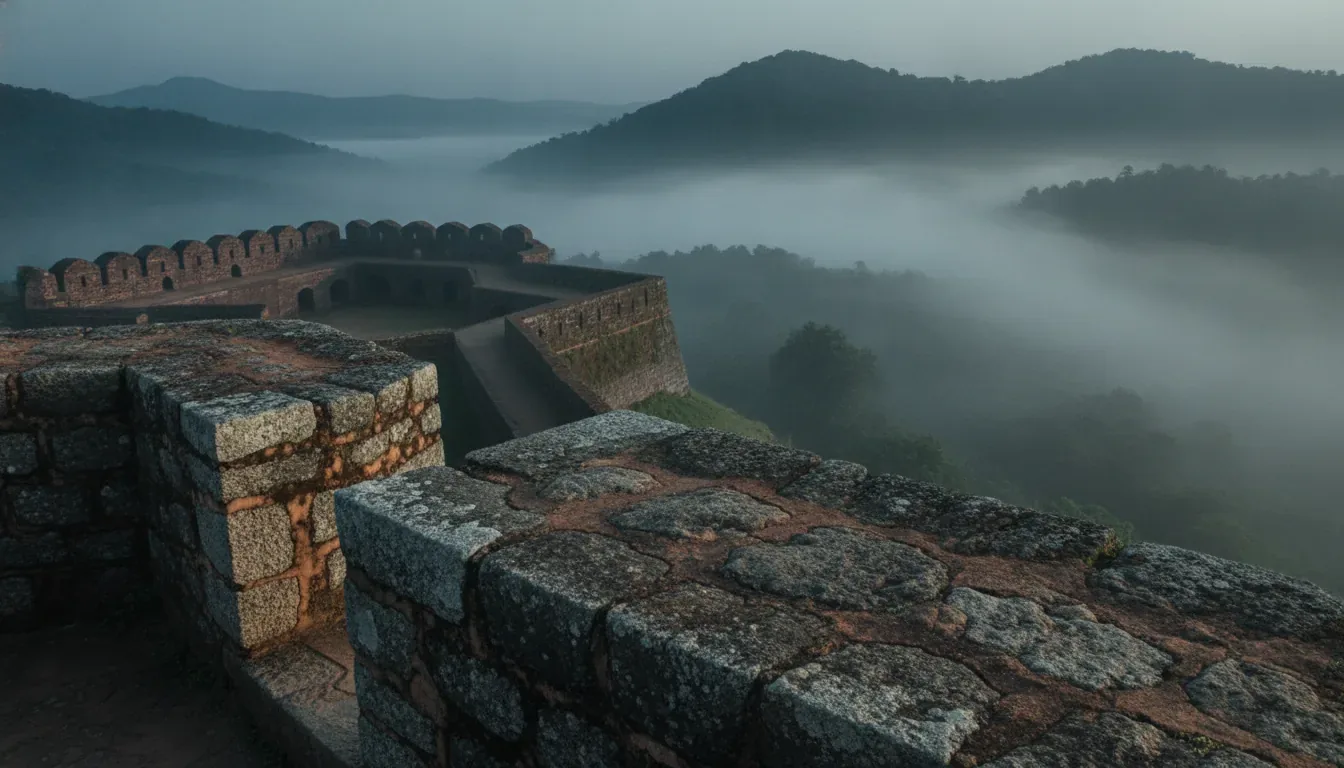
Manjarabad Fort's star shape comes from the star-fort designs made popular by the French engineer Sébastien Le Prestre de Vauban, built here as an eight-pointed star. That is why the walls zigzag instead of running in a plain square or circle.
A star fort puts a pointed bastion at each corner. From a bastion, defenders could see and fire along the face of the walls on either side, which removed the blind spots that engineers called "dead zones". Across the design as a whole, star-fort walls were also made lower and thicker to take cannon fire.
At Manjarabad Fort, the outer walls are granite and lime mortar, and the rooms inside are fired brick. On the ramparts, walk out to one of the eight points and look back along the wall to see the idea at work.
The star is the outline. What sits inside the walls is smaller, and easy to cover in an hour.
What can you see inside Manjarabad Fort
Inside Manjarabad Fort you find a deep well, two underground gunpowder cellars beside it, the rooms that held the barracks and armoury, and the ramparts that trace the eight points of the star. What to see is compact, so the things to do in Manjarabad Fort come down to walking the walls and stopping at each of these:
- The deep well.
- The two gunpowder cellars beside the well. Wikipedia notes these underground rooms stayed cool even in summer.
- The rooms used as army barracks and an armoury.
- The ramparts, which you can walk around all eight points.
- The view: the Western Ghats on every side, with the greenery, valleys and forest Karnataka Tourism describes, and, on a clear day, the Arabian Sea, as Wikipedia records.
All of this depends on getting there while the gate is open.
What are Manjarabad Fort's timings and entry fee
Manjarabad Fort is open every day from 8 am to 6 pm, according to Karnataka Tourism, and there is no entry fee.
Some travel listings give 5 pm as the closing time, so plan to be done by 5 pm. The 8 am opening is the hour to aim for, since it is quieter and cooler. There is no ticket to buy: entry is free.
These timings were checked in September 2026. Once you know when to arrive, the next thing is the road in and where to leave the car.
How do you reach Manjarabad Fort, and where do you park
Manjarabad Fort sits just off NH75, 4 to 6 km south-west of Sakleshpur town on the Mangaluru side, about 40 km from Hassan. The distance from Sakleshpur varies a little by source, depending on where in town you start.
From
How
Time or distanceSakleshpur town | By road along NH75 | 4 to 6 km
Bengaluru | NH75 through Hassan and Sakleshpur | About 220 km to Sakleshpur (4 to 5 hours), then 4 to 6 km on
Hassan | NH75 | About 40 km
Ashvana | By road | 8.7 km, 13 minutes
By train | Sakleshpur railway station (SKLR), then by road to the fort | 4 to 6 km from town
The fort is a landmark on the highway itself. One driver's road report on YouTube named it among the rough patches on the way: "short bad stretches at 3 places: Hassan bypass, Star fort, and Nelyadi flyover".
Where do you park
Vehicles stop short of the fort. You park, walk about 200 m, and then take the steps up. On weekends and long weekends, arrive early.
From the parking spot, the climb is the part to think about.
How many steps are there, and can kids and older parents manage the climb
The climb to Manjarabad Fort is about 250 stone steps after a short walk of about 200 m from where vehicles stop. Counts online run from 200 to 300, because people start counting from different points.
Can you climb it with kids and elders? It depends more on the person than the age, and there is no other way up than the stairs.
- Fit adults and older children: yes, at an easy pace with stops on the way.
- Small children: yes, with a hand held, since the steps are uneven.
- Older parents, or anyone with knee or breathing trouble: think twice before you set out.
- Wheelchairs and prams: not possible, as the way up is steps only.
Wet stone steps get slippery, so wear shoes with grip in the monsoon. Once you know your group can manage the climb, pick the day and hour, because the view at the top depends on both.
What is the best time to visit Manjarabad Fort for clear views
The best time to visit Manjarabad Fort is winter or just after the monsoon, when the hills are green and the air is clear, and 8 am on any day for the quietest hour.
Season
What you getMonsoon (July to September) | Green hills, often fog over the fort; views come and go; slippery steps
Just after the monsoon and winter (October to February) | Your best chance of clear views; the official best time
Summer (March to May) | Warm middays; go early
For time of day, the 8 am opening gives you fewer people and softer light for photos. Aim to finish by 5 pm.
Most searches for Manjarabad Fort happen in June to August, the months the fort is most likely to sit in mist. A winter trip gives you a better shot at the clear view, with fewer people around.
Whatever the season, a few habits keep the steps and ramparts safe.
How do you stay safe at the fort, especially in the monsoon
A safe visit to Manjarabad Fort comes down to grip on the steps, distance from the rampart edges, and daylight. The fort is a monument more than 230 years old and only partially restored, so treat the old stone with care.
- Wear shoes with grip; wet stone is slippery.
- The ramparts are old stone walls. Keep children close and stay back from the outer edges, more so in fog or rain.
- Plan to be down by 5 pm.
- Carry water and something to eat, and plan food in Sakleshpur town.
- Follow the simple rules any old monument asks for: do not climb loose walls, do not write on the stone, and carry your litter out.
Most visits take only the morning, which leaves time for something else close by.
What else can you see near Manjarabad Fort in the same morning
A morning around Manjarabad Fort fits the fort at 8 am, then either a roadside waterfall in the monsoon or the Sakleshwara temple by the river, then lunch in Sakleshpur town. Times below are from Ashvana.
- Leave after an early breakfast. The fort is 13 minutes from Ashvana.
- Spend about an hour at Manjarabad Fort from 8 am.
- In the monsoon, stop at Manjehalli Falls, beside the state highway (26 minutes from Ashvana). Watch from the edge and do not get in. In other months, visit Sri Sakleshwara Swamy Temple by the Hemavathi (17 minutes from Ashvana).
- Have lunch in Sakleshpur town.
If you want more nearby places, Hadlu Falls (24 minutes from Ashvana) and Agni Gudda (38 minutes) suit an afternoon. Karnataka Tourism also lists the Magajahalli Waterfalls and the Bettada Byraveshwara Temple near the fort.
A morning like this works best if you wake up close to the fort instead of on the highway.
Where should you stay near Manjarabad Fort
The easiest way to be at Manjarabad Fort when it opens is to stay the night nearby, since the drive from Bengaluru alone takes 4 to 5 hours. A stay close to the fort puts you at the gate for the quiet 8 am hour, with the rest of the day left for the falls, the temple or nothing at all.
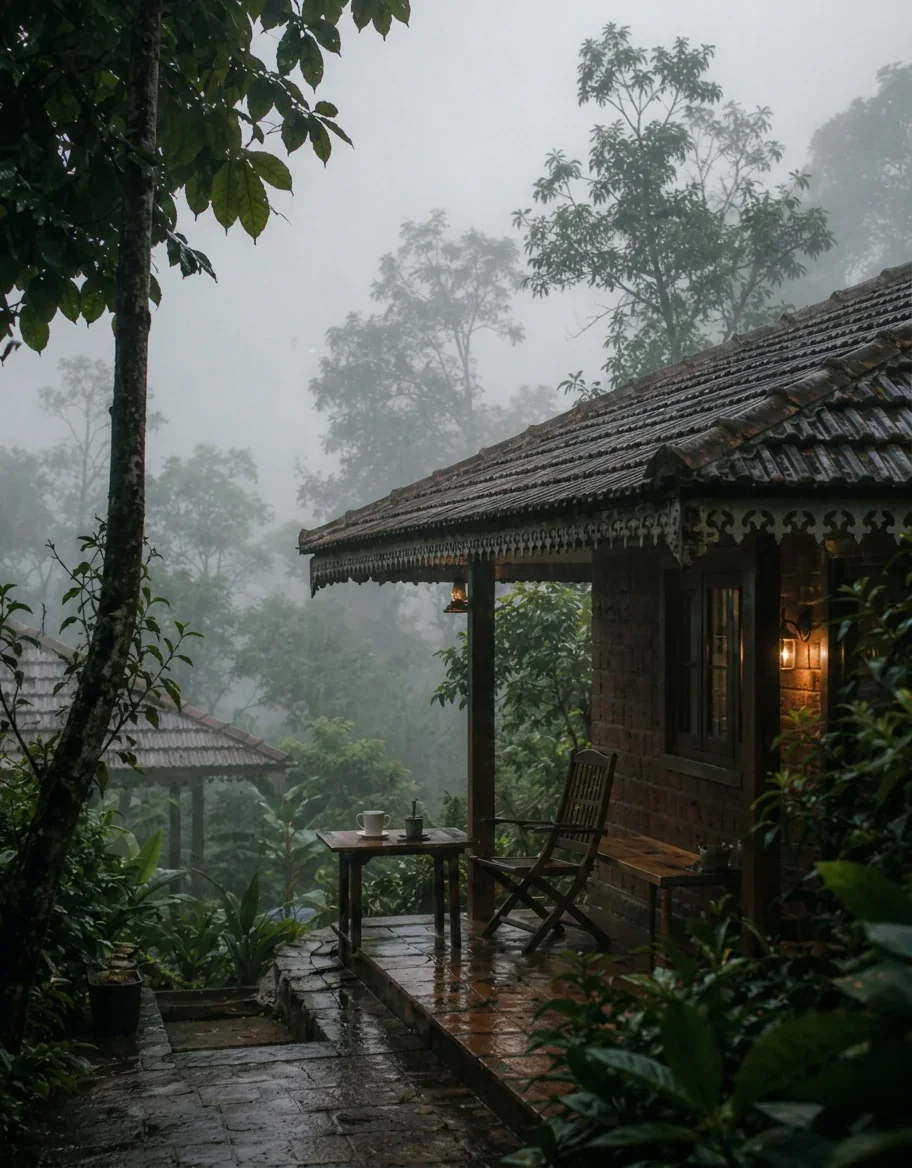
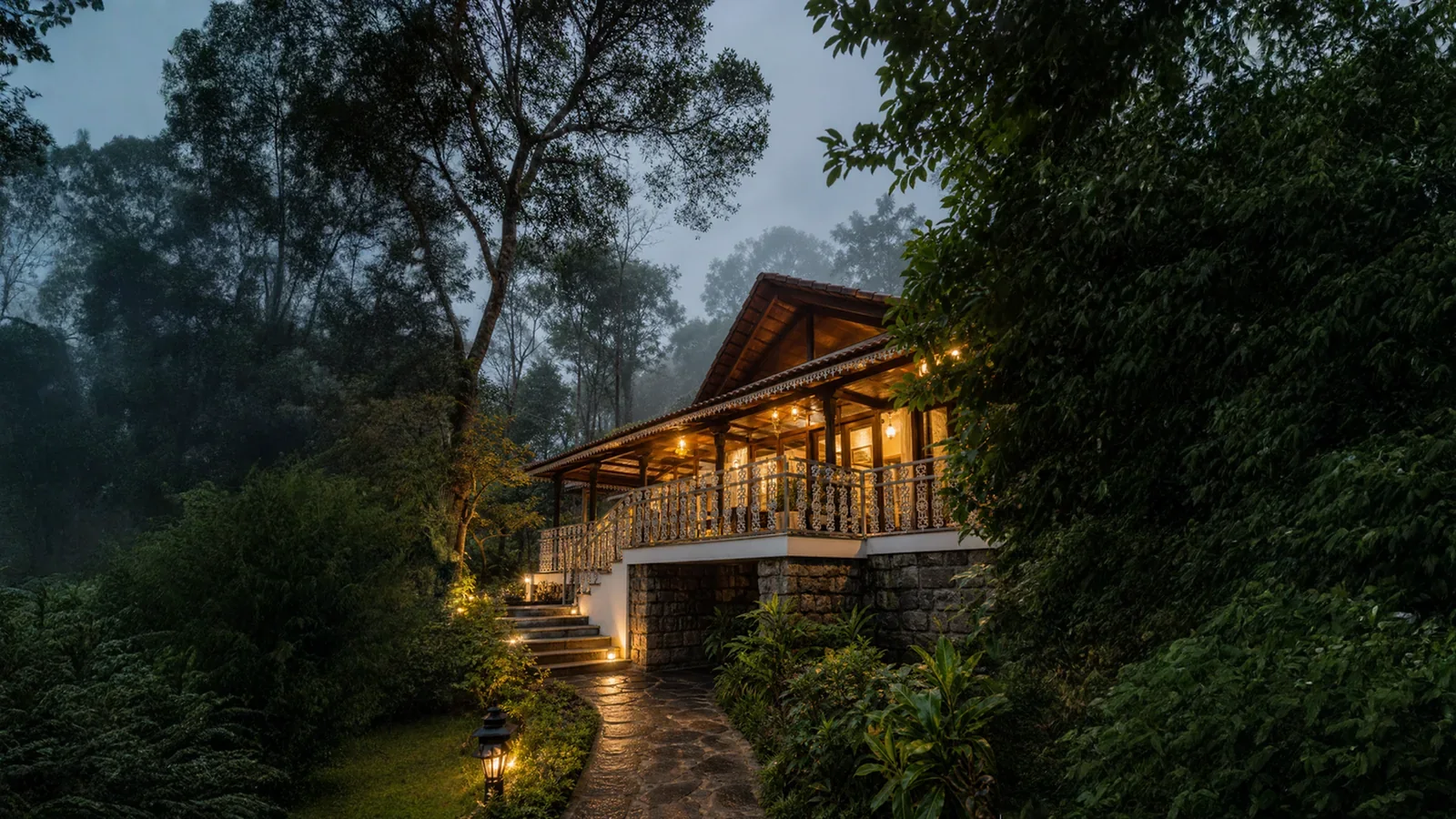
Ashvana, A Vibez Estates Signature, is a sustainable slow-luxury resort in Sakleshpur's Malnad hills: a 20-acre reserve built in laterite, terracotta and timber, 13 minutes from the fort. On site there are coffee tasting sessions, nature trails and an infinity pool. Cottages range from the Hornbill Suite to the Family Cottage.
If an early start at the fort is the plan, booking the stay is the simple part.
Stay 13 minutes away and be at the gate of Manjarabad Fort when it opens at 8 am. Ashvana's cottages start at ₹6,300 a night on weekdays, GST included (2026).
Good to Know
Questions, Answered
Who built Sakleshpur fort?
Manjarabad Fort, the star fort outside Sakleshpur, was built by Tipu Sultan in 1792.
Which fort was built by Tipu Sultan?
Near Sakleshpur, the fort built by Tipu Sultan is Manjarabad Fort, the eight-pointed star fort of 1792.
Can we see the Arabian Sea from Manjarabad Fort?
On a very clear day, according to Wikipedia, you can see the Arabian Sea from Manjarabad Fort. Winter mornings give you the best chance; in monsoon fog you will not see it.
What is the history of Manjarabad Fort in Kannada?
Manjarabad Fort's Kannada name is ಮಂಜರಾಬಾದ್ ಕೋಟೆ, and Karnataka Tourism ties the name to "manju", the Kannada word for fog. In short, Tipu Sultan built the star fort in 1792 to keep the highway between Mangalore and Coorg secure.
Where can I park near Manjarabad Fort?
Vehicles stop about 200 m short of Manjarabad Fort. You walk up from there and then climb about 250 steps, so arrive early on weekends.
Is there a tunnel in Manjarabad Fort?
The story of a tunnel from Manjarabad Fort to Srirangapatna is popular, but the accounts of the fort from Karnataka Tourism and Wikipedia do not mention one.
How long do you need at Manjarabad Fort?
About an hour at Manjarabad Fort is enough, including the climb.