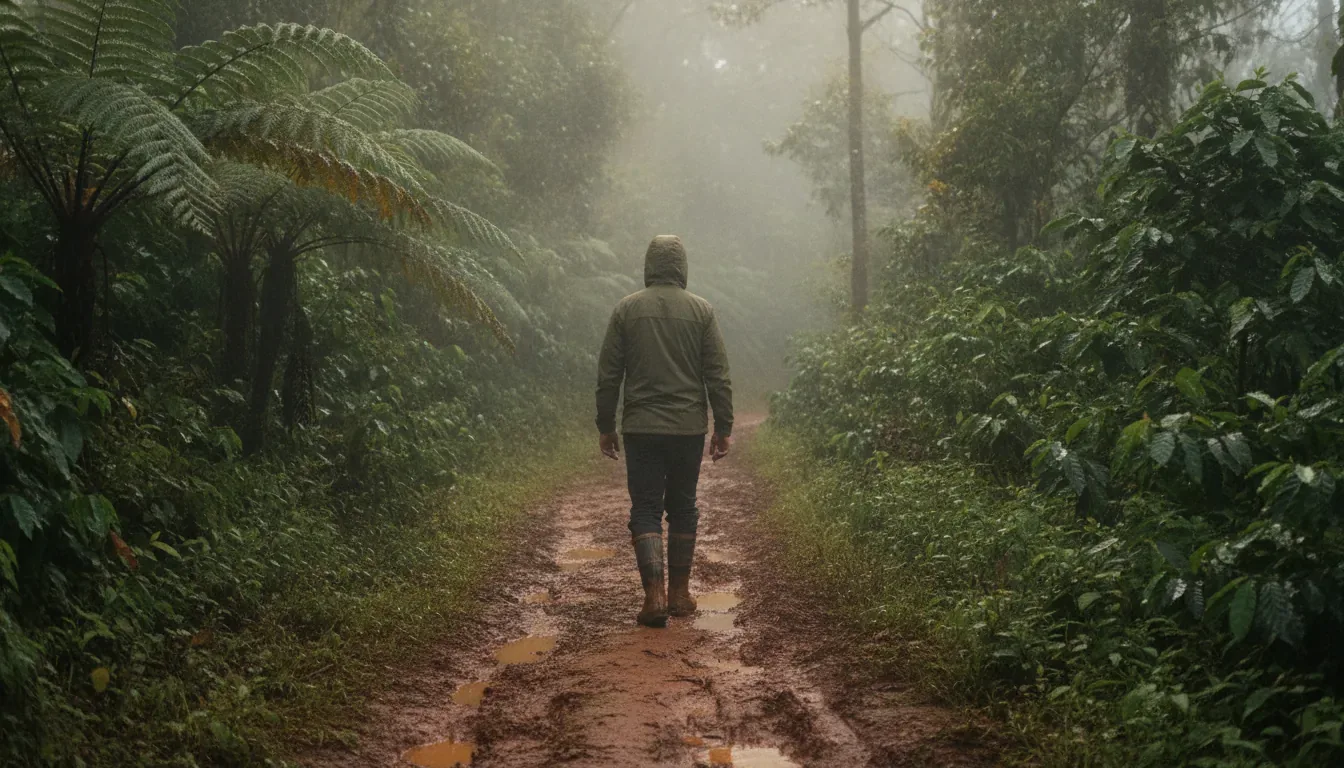
Sakleshpur's waterfalls are at their best in the monsoon and just after it, when the Western Ghats around the town run with water. That is also when planning a trip from Bengaluru gets tricky. Several falls share the same name, some sit right beside the road while others need a muddy walk, and a few popular "treks" are not legal at all.
This guide sorts it out: which fall is which, how far each one is, how you reach it, the months each one flows, and how to enjoy the Malnad monsoon safely. One traveller summed up the season in a Facebook trip post: "Monsoon trips will not be complete without saying Hi to leeches." Plan for the leeches and the slippery rocks, and the falls are well worth the trip.
Here is the short answer first: the main falls and the legal treks.
What are the main waterfalls and legal treks near Sakleshpur
The main waterfalls near Sakleshpur are Magajahalli (also called Hanbal or Abbi Falls), Manjehalli, Hadlu, Mookanamane and Donigal Small Falls, with Mallalli Falls a longer day trip into Kodagu. They flow best from July to October. Do not swim at any of them: the rocks are slippery, and in heavy rain paths flood and streams rise faster than you expect. For treks, pick legal hikes such as Agni Gudda, Jenukal Gudda or the Karnataka Forest Department's Ettina Bhuja trek; walking the Green Route railway line is banned.
Before the details, one thing trips up almost every visitor: why so many of these falls share one name.
Which waterfall is "Abbi Falls"
"Abbi Falls" is a name used for at least three waterfalls around Sakleshpur, plus a better-known Abbey Falls in Coorg, so check the village name before you set out. When you search "abbi falls sakleshpur", Google's own listing points to Magajahalli.
- Magajahalli Falls, near Devaladakere on the road to Hanbal, is also called Hanbal Falls and Abbi Gundi Falls. This is the one most people mean.
- Manjehalli Falls sits beside the state highway that links Agani and Hanbal to Sakleshpur. Some travel sites call it Abbi Falls too.
- Mookanamane Falls, near Jedigadde on the edge of the Bisle forest, appears on Google Maps as Mookanamane Abbi Falls.
- Abbey Falls (also spelled Abbi Falls) is 8 km from Madikeri in Kodagu. It is a different trip altogether.
So if someone asks how far Abbi Falls is from Sakleshpur, the usual answer is Magajahalli: about 21 km from town.
With the names sorted, the next question is how far each fall is and how you reach it.
How far is each waterfall, and can you reach it by car
Hadlu and Manjehalli are the closest falls to Ashvana, at 24 and 26 minutes by road. Magajahalli is about 21 km from Sakleshpur town, and Mookanamane about 41 km. Access is where they really differ: some you see from the car window, others need a walk on a mud track.
Fall
Also called
Distance
How you reach it
Best months
Easy with kids?Hadlu Falls |
| 13.5 km, 24 min from Ashvana | Half-gravel, half-mud track, then a walk of about 45 minutes to an hour | June to December | Skip with small children
Manjehalli Falls | Abbi Falls (some sites) | 14.8 km, 26 min from Ashvana | Roadside, beside the state highway | Monsoon; thin in summer and winter | Yes
Magajahalli Falls | Hanbal Falls, Abbi Gundi Falls | About 21 km from Sakleshpur town | Short off-road stretch, then a short walk from roadside parking | July to October | Yes, with care on the rocks
Mookanamane Falls | Mookanamane Abbi Falls | About 41 km from Sakleshpur town | Downhill walk of about 1 to 2 km, then a boulder climb | June to September peak; calmer October to February | Skip with small children
Donigal Small Falls |
| Seen from the highway | Roadside; no washrooms | Monsoon | Yes
Mallalli Falls (Kodagu) |
| 23 km from Somwarpet | Last 2 km on foot along a concrete road, then about 400 steps down | June to September | Skip with small children
Times for Hadlu and Manjehalli are measured from Ashvana. Other distances are from the town named in the row.
Numbers only tell you so much. Here is what each fall is like once you get there.
Which Sakleshpur waterfalls are worth visiting
Magajahalli Falls (Hanbal or Abbi Gundi Falls)
Magajahalli Falls is the easiest good-sized fall near Sakleshpur: about 20 feet high, a short walk from the road, and one of the most-reviewed falls in the area on Google. It sits at the foothills of the Pushpagiri range, 5 km from Hanbal, down a small side road off the Sakleshpur main road. It dries up in summer and winter, so it belongs on a monsoon or post-monsoon plan.
Go if you want a proper waterfall with little walking. Skip if you are visiting in summer.
Manjehalli Falls
Manjehalli Falls is a small, moderate waterfall right beside the state highway, 26 minutes from Ashvana. It flows well in the monsoon and thins out in summer and winter. Because you can see it from the road, it is the least effort of any fall on this list.
Go if you have older parents or small children with you. Skip if you want a big drop or a walk.
Hadlu Falls
Hadlu Falls drops in six stages and is 24 minutes from Ashvana by road. The catch is the last stretch: a half-gravel, half-mud track that is uneven and narrow, then a walk of about 45 minutes, sometimes an hour. In heavy rain the path floods quickly. Guides from nearby villages help visitors find the safest way in.
Go if you are fit, have grippy shoes and can go on a dry-ish day. Skip if it has rained hard all morning.
Mookanamane Falls
Mookanamane Falls sits between the Bisle Forest Reserve and the Kaginahare forests, about 41 km from Sakleshpur. You reach it by a downhill walk of about 1 to 2 km followed by a climb over boulders, and you walk back up the same way. It is among the most-reviewed falls in the region, and the forest setting is the reason people make the effort.
Go if you want a half-day outing with a proper walk. Skip if anyone in the group is unsteady on wet rock.
Donigal Small Falls
Donigal Small Falls is a roadside fall you can see from the highway. There are no washrooms, so plan a stop elsewhere. It is a quick, easy look rather than a destination on its own.
Go if you are passing that way in the monsoon. Skip if you want somewhere to spend an hour.
One more fall is worth the longer outing: Mallalli, across the district line in Kodagu.
Is Mallalli Falls worth a day trip from Sakleshpur
Mallalli Falls is a big monsoon waterfall on the Kumaradhara river in Kodagu, 23 km from Somwarpet, so from Sakleshpur it is a full day out rather than a quick stop. Plenty of videos call it a Sakleshpur fall. It is not; it sits near Kumaralli village at the foothills of the Pushpagiri hills, 54 km from Madikeri.
It is worth it in the monsoon, with a few conditions. After the motorable road ends, you walk about 2 km on a concrete road, then go down about 400 steps to the viewpoint, and climb all of them again on the way back. The fall is at its best from June to September and almost dries in summer. The water is not safe during the peak monsoon, so this is a fall to look at, not to get close to.
Go if your group is fit and you can give it the whole day. Skip if you have small children or knee trouble in the group.
Whichever falls you pick, timing matters more than anything else.
When do the Sakleshpur waterfalls flow best
Sakleshpur's waterfalls flow best from July to October. Most thin out by summer, and the Forest Department treks usually open from September to February. Searches for Sakleshpur waterfalls peak between June and August for good reason: that is when the water is.
Season
Months
Waterfalls
TreksMonsoon | June to September | Full flow. Paths are slippery, leeches are out, and the Hadlu path can flood. | Wet and muddy. Forest Department treks start opening in September.
Post-monsoon | October to November | Still flowing but calmer. The best mix of water and walkable paths. | Trails drying out; a good time for most hikes.
Winter | December to February | Most falls thin out; Magajahalli and Manjehalli run low. Hadlu keeps some flow into December. | Forest Department treks open. Good hiking weather.
Summer | March to May | Most falls are dry or a trickle, and Mallalli almost dries. | Hot and dry. Go early in the day.
If you only have one weekend, aim for late July to October. Falls in the first half of the monsoon are dramatic, but the paths are at their worst.
Falls are one half of a Sakleshpur trip. Treks are the other, and not all of them are allowed.
Which treks near Sakleshpur are legal, and do you need a guide
The legal treks near Sakleshpur range from a short sunset climb up Agni Gudda to the Forest Department's Ettina Bhuja trek, which you book online on Aranya Vihaara. Here they are, easiest first.
Nature trails at Ashvana
Guests at Ashvana can walk the nature trails and working coffee plantations on the estate. It is the gentlest option here and a good warm-up before a bigger hike.
Agni Gudda
Agni Gudda, near Agani, is 38 minutes from Ashvana. It is a short, beginner-friendly climb of about 3 km, best known for sunsets, and Karnataka Tourism lists it among Sakleshpur's trekking spots.
Jenukal Gudda
Jenukal Gudda (also written Jenukallu Gudda) rises to 1,383 m and is one of the highest hills around Sakleshpur. The trail starts at Bettada Bhairaveshwara Temple, about 35 km from Sakleshpur, and runs about 5 km through forest and coffee estates. Treat it as a full day hike of moderate effort.
Ettina Bhuja (Forest Department trek)
Ettina Bhuja is in Chikkamagaluru district, so it is a longer outing from Sakleshpur. It is a moderate trek of about 8 km to a peak shaped like an ox's hump. You book it online through the Karnataka Forest Department's Aranya Vihaara portal, which sets a daily cap on trekkers and shows the permit fee when you book. Forest treks in Karnataka usually open from September to February, and the minimum age varies by trek, so check both on the booking page and book at least a day ahead.
Do you need a guide
For a Forest Department trek, follow whatever the booking includes. For village trails and waterfall paths in the monsoon, a local guide is the safer choice, because paths change after heavy rain. Guides from nearby villages know which paths are safest, and as one Bengaluru traveller put it on Reddit: "if you ask the homestay folks, they can arrange a local guide for you."
There is one trek you will see online that belongs on no legal list: the Green Route.
Can you trek the Green Route railway line
No. The Green Route railway trek is banned: walking the line between Donigal and Yedakumeri stations is trespass under Section 147 of the Railways Act, 1989, and a case can be registered against trekkers. A warning board near Sakleshpur railway station says so plainly: "trekking on this route is banned."
A trekker's account on Tripoto puts it just as directly: "The Green Route Trek is BANNED and is illegal to trek. A case will be registered against you..."
The ban is not only a legal point. This is a working line through steep, wet ghat country. In June 2025, a landslide dropped boulders onto the Sakleshpur to Subrahmanya Road section and trains were held. The track is no place to be on foot, especially in the monsoon.
If you want to see the ghat section, ride through it as a train passenger. If you want a trek, pick one from the legal list above.
The other big safety question on this trip is the water itself.
Is it safe to swim at the Sakleshpur waterfalls
No. Swimming at the Sakleshpur waterfalls is not safe: the rocks are slippery, and in heavy rain paths flood and streams rise faster than you expect. Some travel pages and videos still suggest a dip. This guide does not.
At Magajahalli the pool can look shallow and calm, but the rocks around it are slick. At Mookanamane you cross slippery boulders and streams just to reach the fall. Mallalli's water is not safe in the peak monsoon, and the Hadlu path floods quickly when it rains hard.
A short checklist for any waterfall day:
- Stay out of the water, even when the pool looks shallow.
- Wear shoes with real grip. Sandals and flip-flops slide on wet rock.
- Leeches hide under wet leaves in the monsoon, so carry leech socks or repellent, and wear dark clothes, which draw fewer leeches.
- Go in daylight only, and be back at the car well before dusk.
- If the path ahead is under water, turn back.
- Where trails cross coffee estates, stay on the path.
- Carry drinking water and a rain layer.
- Estate and village roads get muddy in the monsoon. Walk the last stretch rather than force a car through.
Most of this matters more when you have children or older parents with you.
Which waterfalls are easy with kids or older parents
Manjehalli and Donigal are the easiest falls for families, because you see them from the road. Magajahalli comes next, a short walk from where you park, with care needed on the rocks near the water.
Skip Hadlu with small children: the walk in is 45 minutes to an hour on an uneven, narrow mud track. Skip Mookanamane too, with its 1 to 2 km downhill walk and boulder climb. Mallalli's 400 steps down, and back up, make it a poor pick for small children and older parents.
For a family day, pair Manjehalli with Magajahalli and keep the longer walks for another trip.
Now, putting it all together into one day.
What does a waterfall day look like from a Sakleshpur base
A waterfall day near Sakleshpur works best as the closest falls in the morning and a short hill in the evening. Hadlu is 24 minutes from Ashvana, Manjehalli 26, Agni Gudda 38, and Bisle View Point 57.
Monsoon day (July to October)
- Morning: Hadlu Falls, 24 minutes from Ashvana. Allow time for the walk in and out, about 45 minutes each way. Families can swap in Manjehalli, 26 minutes away and right beside the road.
- Midday: Magajahalli Falls on the Hanbal road, about 21 km from Sakleshpur town.
- Late afternoon: Agni Gudda for sunset, 38 minutes from Ashvana, if the path is not waterlogged.
Longer option: give Mookanamane a day of its own, with Bisle View Point (57 minutes from Ashvana) on the same side.
Winter swap (December to February): the falls thin out, so make it a trek day instead. Jenukal Gudda works, or an Ettina Bhuja slot booked on Aranya Vihaara.
The easiest way to do this without a pre-dawn start from Bengaluru is to stay close by.
Stay close to the falls
Stay close to the falls: Hadlu is 24 minutes from Ashvana, and Manjehalli 26. Guests get precise directions before they arrive.
Close enough for a weekend. Far enough to truly disconnect.
[ WhatsApp us ]
Good to Know
Questions, Answered
Does Sakleshpur have waterfalls?
Yes. Sakleshpur has several waterfalls close to town, including Magajahalli, Manjehalli, Hadlu, Mookanamane and Donigal Small Falls. They flow best from July to October.
What are the top 5 waterfalls?
Near Sakleshpur, the top five are Magajahalli, Hadlu, Mookanamane and Manjehalli, plus Mallalli Falls if you can give it a full day in Kodagu. Magajahalli is the easiest good-sized fall; Mallalli is the biggest but needs about 400 steps each way.
What are the timings for Magajahalli Falls?
Magajahalli Falls is a daytime stop. Go between morning and late afternoon, and leave before dusk, when the path and rocks are hardest to see.
What should I bring to Magajahalli Falls?
For Magajahalli Falls, bring shoes with good grip, a rain layer, drinking water and, in the monsoon, leech repellent. Leave the swimwear at home: the water is not for swimming.
How far is Hadlu Falls from Sakleshpur?
Hadlu Falls is 13.5 km and about 24 minutes by road from Ashvana in Sakleshpur. After that comes a walk of about 45 minutes on a mud track.
Is there trekking in Sakleshpur?
Yes. Legal treks near Sakleshpur include Agni Gudda, Jenukal Gudda and, in Chikkamagaluru district, the Ettina Bhuja trek booked on Aranya Vihaara. The Green Route railway trek is banned.
Which trek is best near Sakleshpur?
The best trek near Sakleshpur depends on your effort level: Agni Gudda for a short sunset climb, Jenukal Gudda for a full day hike, and Ettina Bhuja for a booked Forest Department trek.
Is Abbey Falls near Sakleshpur?
No. Abbey Falls is 8 km from Madikeri in Kodagu. The "Abbi Falls" people mean near Sakleshpur is usually Magajahalli, about 21 km from town.