Belur is about 37 km from Sakleshpur, 45 minutes to an hour by road, and Halebidu about 50 km, with the two temples about 16 km apart. Yes, you can see both in one unhurried day: Halebidu first while it is cool, then Belur, and you are back in Sakleshpur by late afternoon.
The two towns hold two of the three Hoysala temples that together became a UNESCO World Heritage Site in 2023. From Sakleshpur, they make a calm day out, not a rushed detour on the long road from Bengaluru.
This guide covers the road and the distance from Sakleshpur, what to see at each temple, which one to visit first, a timed plan for the day, guides, timings and dress, and the best time to go.
First, the numbers at a glance.
Belur and Halebidu at a glance
Belur
HalebiduTemple | Chennakeshava Temple (Vishnu) | Hoysaleswara Temple (Shiva)
From Sakleshpur | about 37 km, 45 min to 1 hour | about 50 km, 1 to 1.25 hours
Between the two | about 16 km | about 16 km
Opening hours (2026 guides) | opens about 7:30 am, open into the evening | early morning to about 6 pm
Entry | free | free (museum has a small ticket)
Time to allow | 1.5 to 2 hours | 1.5 to 2 hours
Guide (2025) | about ₹300 to ₹500 | about ₹300 to ₹500
Distances are by road from Sakleshpur town, and the timings are from 2026 guides. Hours can change on festival days. Shoes come off at the entrance, and modest clothing is expected at both.
So why give these two temples a whole day?
Why are Belur and Halebidu worth the drive
Belur and Halebidu are the two capitals of the Hoysala kings, and their 12th-century temples are two of the three that UNESCO listed in 2023 as the Sacred Ensembles of the Hoysalas. Belur's Chennakeshava Temple was built for King Vishnuvardhana in 1117 to mark his victories over the Cholas. Halebidu, then called Dorasamudra, was the Hoysala capital for nearly 300 years.
Both temples are carved in chloritic schist, a soapstone that is soft when it is cut and hardens with age, which is why the detail is so fine. The listing was inscribed on September 18, 2023, at UNESCO's 45th session, together with the temple at Somanathapura, and it became India's 42nd World Heritage Site.
The two places also feel different on a visit. Belur is a living temple with daily worship, while Halebidu stands as a monument: Delhi Sultanate armies sacked the city twice in the early 14th century. Getting there from Sakleshpur is the easy part.
How far is Sakleshpur from Belur and Halebidu, and which road do you take
Belur is about 37 km from Sakleshpur on the direct road north, 45 minutes to an hour, and Halebidu is about 16 km further, about 50 km in all.
Take the direct road north from Sakleshpur towards Belur. It is the road to Chikkamagaluru, and Belur sits on it. Routes through Hassan nearly double the distance, because Hassan is about 40 km from Sakleshpur and about 35 km from Belur.
From Belur, Halebidu is about 16 km on, a short drive between the two places.
You will see anything from 32 km to 55 km quoted online for these drives. Some figures are straight-line or bus-stand distances, and the longest send you through Hassan. By road, plan on about 37 km to Belur and about 50 km to Halebidu.
On signs and maps, Halebidu is also spelled Halebeedu or Halebid.
Coming from Hassan, Mysuru or Chikkamagaluru instead? The Sakleshpur distances guide covers each.
Here is what you are driving to see, starting with Belur.
What should you see at Belur's Chennakeshava Temple
The Chennakeshava Temple at Belur is a living Vishnu temple, still in daily worship, set in a walled courtyard with smaller shrines around it. It is also known as Vijayanarayana, and it stands on the Yagachi river. The places worth finding are all inside the temple compound, so a guided visit of 1.5 to 2 hours covers them.
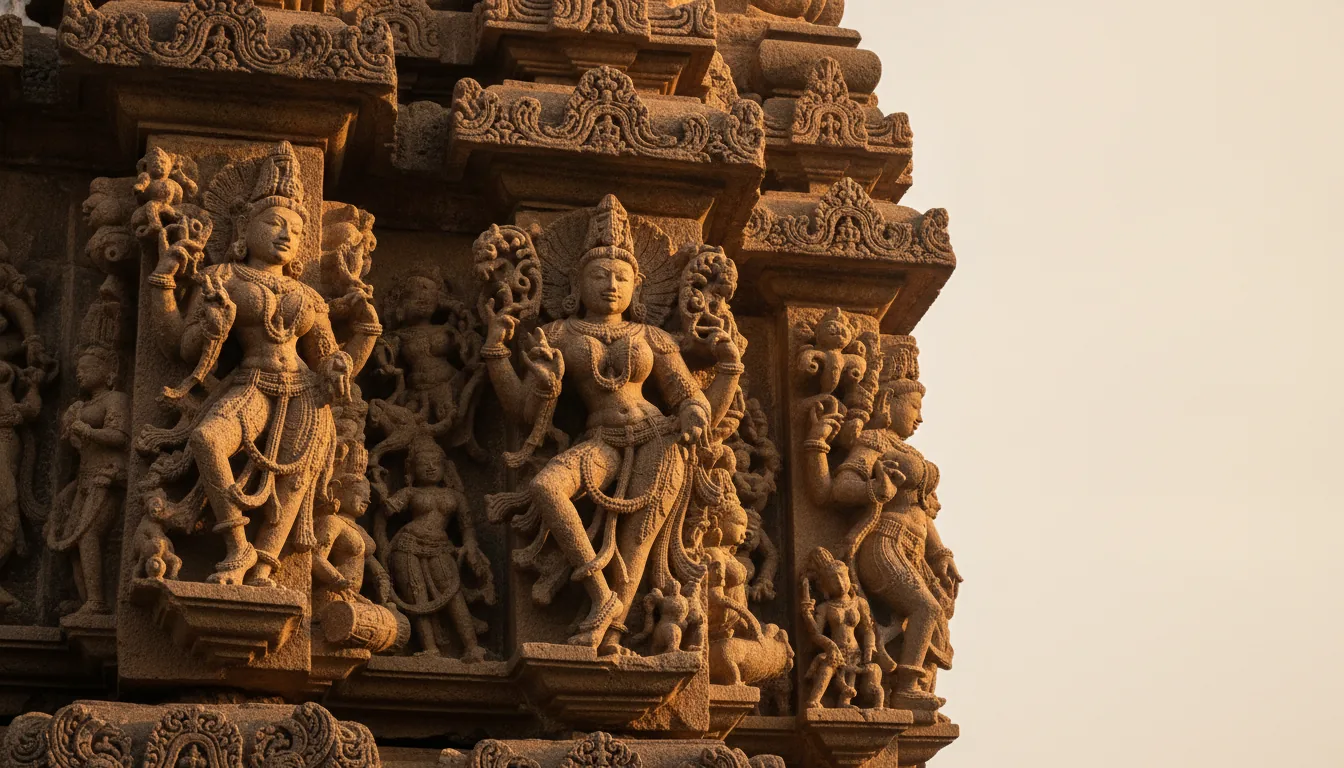
The bracket figures under the eaves. Dozens of carved dancers and musicians, the madanikas, lean out from the top of the outer walls. Ask the guide to point out Darpana Sundari, the lady with the mirror, said to be modeled on Queen Shantala Devi.
Inside the hall, the pillars were turned on a lathe. The Narasimha pillar is carved from top to bottom, and local legend says it once rotated.
In the courtyard, look for the Kappe Chennigaraya and Andal shrines, and for the kalyani, a stepped tank in the northeast corner.
The gopura you walk in under is later work, from the Vijayanagara period.
The time it took. Wikipedia's account puts the work at 103 years, across three generations. The Hassan district record names two of the craftsmen, Dasoja and Chavana.
Belur is the busier of the two temples, but inside, the hall is shaded and cool. Halebidu, the Hoysala capital for nearly 300 years, is about 16 km on.
What should you see at Halebidu's Hoysaleswara Temple
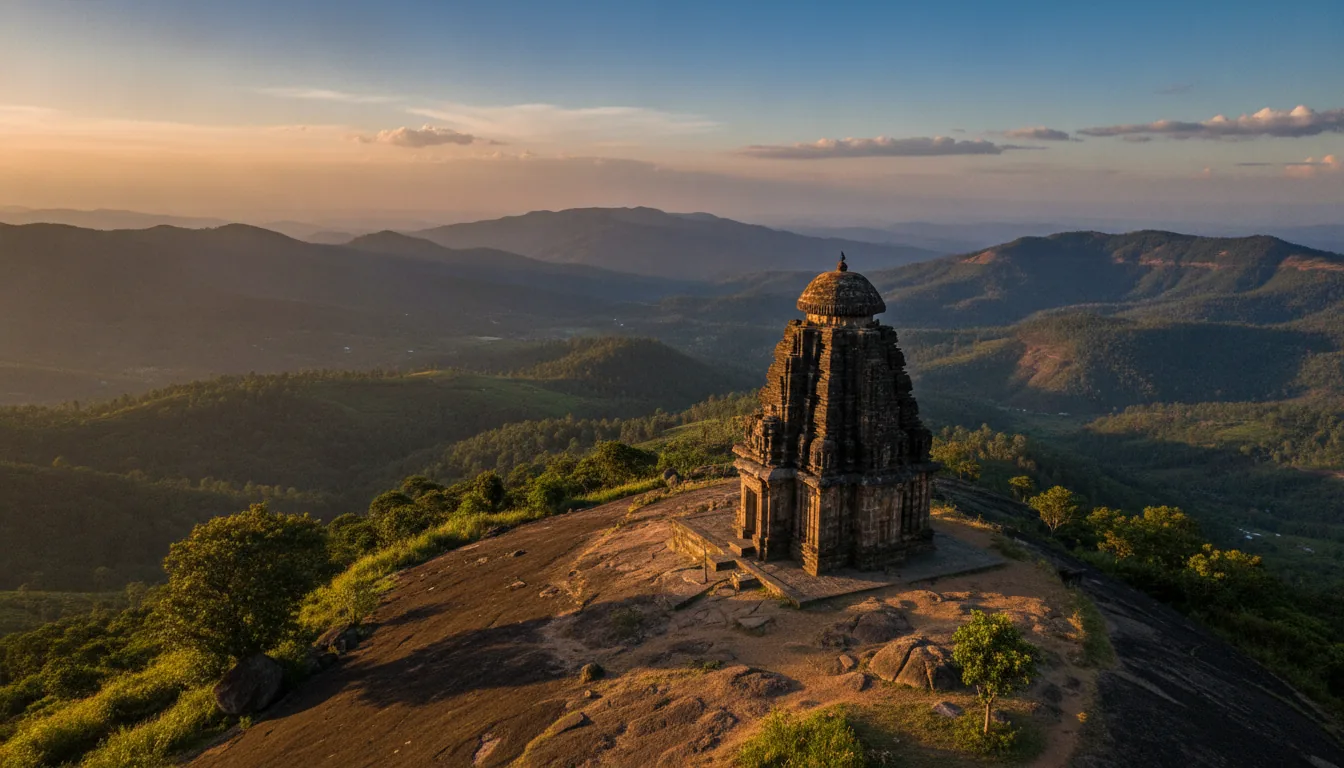
The Hoysaleswara Temple at Halebidu is a twin Shiva temple begun around 1121, with two shrines side by side and outer walls carved with about 340 large figures. It was built by Ketamalla, an officer of King Vishnuvardhana.
Two shrines, two Nandis. The shrines are Hoysaleswara and Shantaleswara, named for the king and for Queen Shantala Devi. Each faces its own Nandi pavilion on the east side.
Read the outer walls from the bottom up. The lowest band is a parade of elephants, and above it run more bands and about 340 large figures from the epics and Puranas. Walk it slowly; a guide is most useful here.
The museum on the grounds, run by the Archaeological Survey of India, holds sculpture recovered from the ruined city. It has a separate small ticket.
Two more places nearby. The Jain basadis and the Kedareshwara temple are a few minutes from the main temple. Add half an hour to your visit if you have it.
The site is open ground with little shade, which is why the plan below puts Halebidu first, in the morning. If you only have time for one of the two, here is how to choose.
Belur or Halebidu: which is better if you only have time for one
Belur is the better pick for a half day: it is closer to Sakleshpur at about 37 km, it is a complete, living temple, and it stays open into the evening (2026 guides; hours can change on festival days). Leave after breakfast, allow 45 minutes to an hour each way and 1.5 to 2 hours for the visit, and you are back by lunch, about 3.5 to 4 hours door to door.
Pick Halebidu if the carving is what you came for. Its outer walls carry about 340 large figures, and the museum is on the grounds.
Halebidu is the longer distance, about 50 km, with little shade, so go early. Visitors who have seen both describe Belur as busier and louder and Halebidu as calmer.
If you have the full day, you can see both, in the right order.
Can you cover Belur and Halebidu in one day, and which comes first
Belur and Halebidu fit into one unhurried day from Sakleshpur if you drive past Belur to Halebidu first, while it is cool, and see Belur on the way back. That way you see Halebidu's open walls before the midday heat and end the day at the temple nearest home.
- Leave Sakleshpur at about 8 am, after breakfast, and reach Halebidu (about 50 km) by about 9 to 9:15.
- Give Halebidu 1.5 to 2 hours: the temple walls with a guide, then the museum, then the Jain basadis if you have time.
- Drive on to Belur, a short distance of about 16 km, and have lunch at one of the small eateries near the temple. They serve simple South Indian meals.
- Visit Belur in the early afternoon, for 1.5 to 2 hours, while the covered hall keeps you out of the sun.
- Leave Belur by about 3 to 3:30 pm and reach Sakleshpur (about 37 km) by about 4 to 4:30.
- You are back with daylight to spare for the evening.
Why this order. Halebidu's walls have little shade, and a visitor there at noon found it "properly hot" (2026). Morning light also shows the carving well. Belur stays open into the evening and is the nearer temple on the drive home.
The reverse. If you would rather beat the Belur crowds, go the other way: Belur when it opens at about 7:30 am, then Halebidu by late morning. Take a hat or umbrella. Opening hours here are from 2026 guides and can change on festival days.
That is about 6 to 7 hours of driving and temple time, plus lunch, and none of it is rushed. If you are staying at Ashvana, it is the same plan from a little outside town.
Next, the practical side: guides, timings and what to wear.
Do you need a guide, and what are the timings, fees and dress rules
A guide is worth it at both temples: approved guides wait at the entrance, and in 2025 a full tour cost about ₹300 to ₹500.
Guides. Rates move with the season and the crowd (2026), so agree the fee before you start. At Halebidu, the carved walls make little sense without one.
Timings. In 2026 guides, Belur opens at about 7:30 am and stays open into the evening. Halebidu is open from early morning to about 6 pm. Hours can change on festival days.
Fees. Entry is free at both temples (2026 guides). The museum at Halebidu, run by the Archaeological Survey of India, has a separate small ticket.
Dress and shoes. Wear modest clothing for the visit. Shoes come off at the entrance, and at Halebidu there is a small fee to leave them (2026).
For photography, check the notice at each gate.
If you are not driving, here is how the buses work.
Can you get there by bus, or should you take a taxi
KSRTC buses run between Sakleshpur and Belur, about an hour each way, and local buses connect Belur and Halebidu. Ask at the Sakleshpur KSRTC bus stand for that day's bus timings.
Doing both temples by bus takes most of the day, with waits between buses. For the one-day plan above, a taxi or your own car is simpler.
The other choice to make is the season.
When is the best time to go
October to March is the easiest season for Belur and Halebidu, with cooler days for walking around the temples. April and May are hot. In the monsoon the countryside turns green; carry rain gear.
Belur's two-day Rathotsava, the chariot festival, has been held in April in recent years (2022 news reports) and draws big crowds. If your dates fall then, plan your visit around it, or go for it.
Whatever the month, go in the early morning or late afternoon rather than at noon, especially at Halebidu.
Last, where to spend the night.
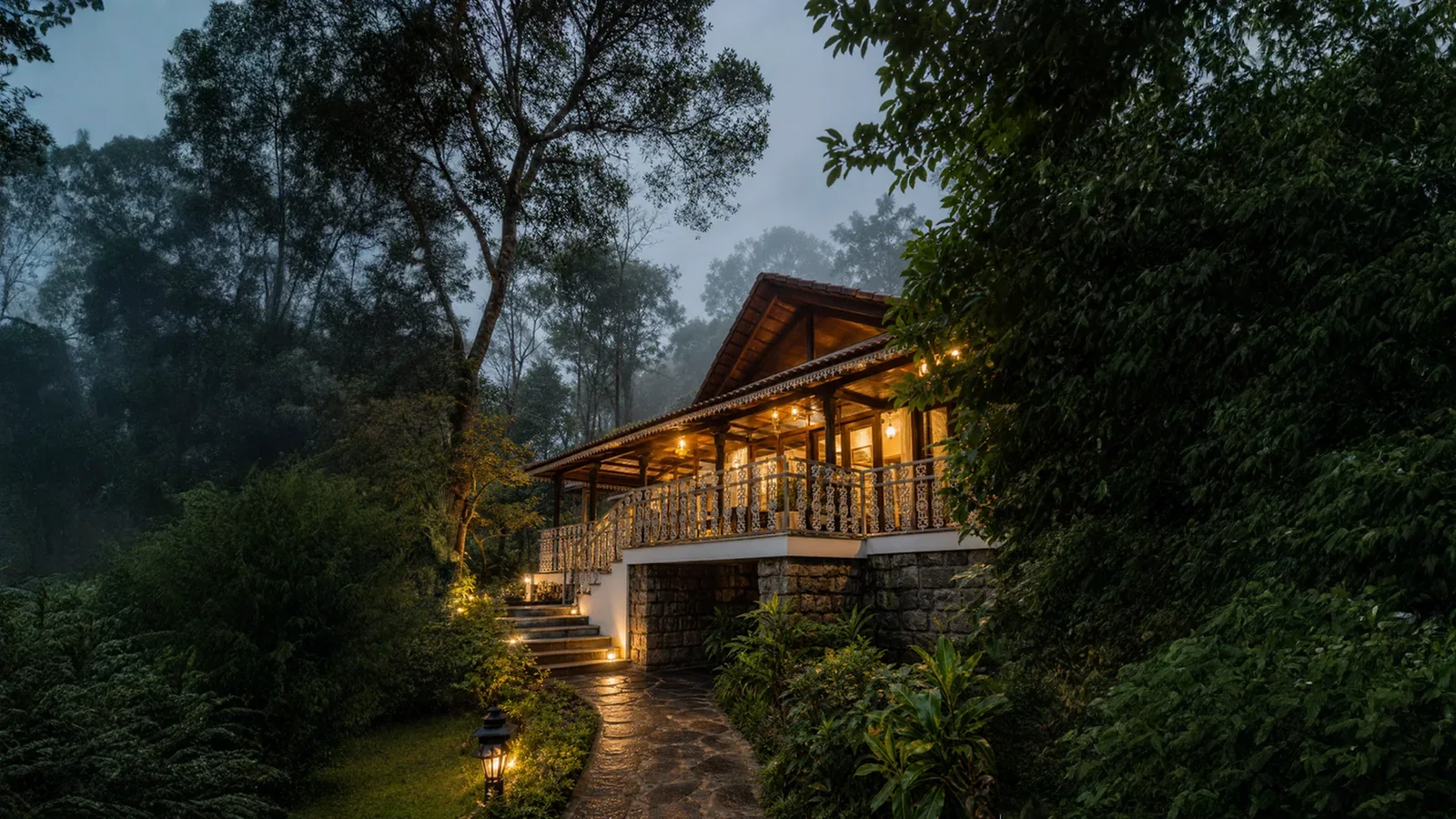
Belur and Halebidu are easiest from a base in Sakleshpur, and Ashvana is just outside town, so you can see both temples and be back for a quiet evening. Tell the team you plan a Belur and Halebidu day when you book, and they will share directions.
Plan a stay at Ashvana, 4 to 5 hours from Bengaluru, and give your visit to the temples a day of its own.
Close enough for a weekend. Far enough to truly disconnect.
Book your stay
Or WhatsApp us on +91 91879 63043.
Good to Know
Questions, Answered
Who built the Belur temple?
Belur's Chennakeshava Temple was built for the Hoysala king Vishnuvardhana in 1117, to mark his victories over the Cholas. It took 103 years to finish.
How old is Belur temple?
Belur temple is about 900 years old; it was begun in 1117.
Which is nearer to Hassan, Belur or Halebidu?
Halebidu is slightly nearer, about 30 km from Hassan, while Belur is about 35 to 38 km away.
How far are Belur and Halebidu from Bangalore?
Belur and Halebidu are about 210 to 220 km from Bengaluru by road, through Hassan. Sakleshpur is about the same distance from Bengaluru, so it works as a base.
Are Belur and Halebidu a UNESCO World Heritage Site?
Yes, Belur and Halebidu are part of one. With Somanathapura, they were listed in September 2023 as the Sacred Ensembles of the Hoysalas.
Is there an entry fee at Belur and Halebidu?
No, entry to both temples is free in 2026 guides. The museum at Halebidu has a small separate ticket, and guides charge extra.